Search Site
30 West Broad Street, Suite 100 | Rochester, New York 14614

Pick Up The Phone & Protect Your Rights
866-772-2122

Social media can be a powerful tool in court and is often used as evidence in criminal cases. Posts, comments, private messages, and even online associations—such as being mutual followers—can all be introduced as evidence. Privacy settings do not make content immune from legal scrutiny; even private accounts can be subpoenaed if the information is relevant to the case. As a result, anything shared online—publicly or privately—may be used against a defendant in court.
Both law enforcement agencies and prosecutors increasingly utilize social media as a critical tool in building cases. They use posts, messages, and online interactions to establish timelines, identify suspects, and uncover potential admissions of guilt. Monitoring social media platforms for indications of illegal activity or suspicious behavior has become standard practice within many police departments. A 2023 survey of police departments further emphasized this trend, reporting that social media is regarded as an important resource for investigating crimes occurring both online and offline.1
Law enforcement reviews public posts in search of illicit activities but can also operate undercover by creating fake profiles or using real accounts. In some cases, individuals may even provide their account access to law enforcement, allowing officers to pose as that person. This tactic can be used to elicit incriminating statements, messages, or photos and videos, which can later be presented as evidence.
Posts that are not thought to be incriminating at the time of the post can later become highly damaging. Posts or comments intended as jokes or hyperbole can easily be misinterpreted or taken out of context. For example, phrases like “I’d kill for pizza right now” or “If you don’t text me back, I’ll kill you”—though likely meant sarcastically—can be viewed as threatening language if scrutinized.
A notable example of social media’s role in criminal prosecution is the case involving two 14-year-old boys convicted of murder. Investigators uncovered that the pair had used Snapchat to coordinate their attack. Saved voice notes and messages revealed explicit discussions about their plans, providing clear evidence of premeditation. Although the boys attempted to delete these communications after the fact, digital forensic experts were able to recover the deleted messages which secured critical evidence that contributed to their conviction.
Social media significantly affects jury impartiality and trial fairness. In high-profile cases, the media often publicizes a defendant’s social media before a verdict—known as “trial by media.” This can lead jurors and the public to form biased views of guilt or innocence. Although jurors are instructed not to research or discuss the case outside the courtroom, the pervasive nature of social media complicates this. Jurors may unintentionally encounter biased content influenced by online posts, comments, or coverage, undermining the trial’s integrity.
There are several important takeaways regarding social media use, especially when facing legal scrutiny. Above all, exercise extreme caution with what you post online. Avoid sharing your location or tagging locations in real-time, as this can provide unintended evidence. Refrain from saving stories or posts that could later be reviewed or subpoenaed. Keep all accounts set to private and limit interactions with unfamiliar users.
Most importantly, never send or share any potentially incriminating messages, images, or videos. A commonly overlooked but critical point: do not delete posts, messages, or media that could be relevant to an investigation or trial. Deletion can be interpreted as consciousness of guilt and may trigger additional charges such as obstruction of justice or destruction of evidence. In the digital age, every post leaves a trail—one that can easily be retraced in a courtroom.
Aniela J. Giarmo, is a Legal Intern at The Law Office of James L. Riotto and is a student at the University of Rochester Class of 2027.
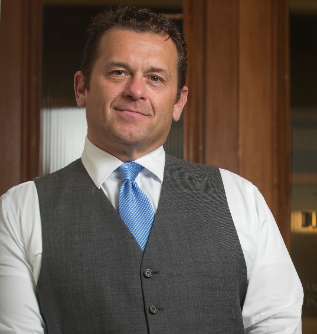
James L. Riotto
Criminal Defense Lawyer
James L. Riotto is an accomplished criminal defense attorney serving clients in New York. With an extensive background in law enforcement and criminal prosecution, his approach to each case is unique and informed by years of experience with the New York criminal justice system. As a graduate from Albany Law School and before going on to start his own practice, James worked at the Albany County District Attorney's Office, where he helped prosecute many DWI offenses. His inside knowledge of the tactics used to gain convictions provides him with a particular advantage when defending against DUI and other criminal charges.

Adam D. Staier
Of Counsel
About Attorney Adam Staier has spent the last seven years practicing criminal defense law throughout upstate New York and the Capital Region. He began his legal career through internships in civil law, indigent legal representation and federal energy law regulation. Finding a passion in criminal law, Mr. Staier held internships handling both prosecution and defense…

William M. Swift
Associate Attorney
About William M. Swift is an associate attorney at the Law Office of James L. Riotto and brings 20 years of experience to our clients. His practice focuses on personal injury cases and criminal matters. He has successfully represented individuals in felony, misdemeanor cases. Additionally, he has extensive knowledge in DMV administrative proceedings involving suspensions…
-
What to do if pulled over for a DUI
How to deal with a DWI traffic stop
How you handle getting pulled over for a DUI/DWI can significantly affect your defense down the road. For instance, declining the officer's request to search your vehicle and avoiding specific answers when asked about any substances you may have consumed could help you when combating DUI/DWI charges in court.READ MORE![]()

Reviews and Ratings
-
 5.0/5.0
Stellar experience with this Top Notch Law Firm!!! James, Bill and Isabelle are true Artisans at their craft. My family can't thank you enough for your...
-
 5.0/5.0
They were great , got back to me immediately once contacted . Michaela handled everything and got the results I was hoping for regarding my daughter’s traffic tickets . I am so grateful for everything!!! I would use them again if needed and highl...
-
5.0/5.0
I had a really great experience working with Riotto Law, Megan got my ticket reduced down to zero points. Would highly recommend!
-
5.0/5.0
Highly recommend the Law Office of James L. Riotto. They handled my son speeding ticket and were able to get the case dismissed. The team was professional, responsive, and made the entire process very easy for us. We’re incredibly grateful for the ...
-
5.0/5.0
This firm gets the job done, thank you So much for your expertise and professionalism, highly recommended
Choose a location to review
Law Offices of James L. Riotto Law office locations:




We Accept the Following Payment Solutions 
Contact us
